
Laurel Canyon Live Builds a Reliable Remote Production Workflow with Medialooks Video Transport
Laurel Canyon Live works across live entertainment, broadcast production, and post-production. The Los Angeles company started as an audio facility and moved into concert production about six years ago. Today its team supports touring and arena productions at the highest level of the industry.
Jason Abell, Engineer at Laurel Canyon Live, works across production engineering, sound mixing, and audio post-production. He's also been building out the company's remote production workflow.
As Laurel Canyon Live started building its own platform for live concerts and on-demand content, the team wanted to give artists new ways to reach audiences beyond the physical venue. That meant finding a reliable way to get professional video and audio from concert venues back to the Los Angeles studio.
The challenge: stable video transport from almost any venue
Laurel Canyon Live already had solutions for transporting audio, but video was a different problem. The team needed a system that could carry SDI video over IP without losing picture quality, sync, or stability.
Network conditions vary a lot from venue to venue. Newer arenas and theaters often have high-capacity fiber; smaller or older venues might have enough bandwidth but weaker networking gear. Whatever they used had to hold up in both cases.
There was also a hardware goal: CTO and CFO John Ross wanted to build the workflow around standard PC hardware, with portable road racks that could travel with an artist and send audio and video back to the studio. That would let technical specialists work remotely instead of traveling to every show.
The solution: a PC-based workflow built for the road
Laurel Canyon Live picked Medialooks Video Transport for its Blackmagic Design integration and its ability to move between high-quality and low-latency transmission.
"The fact that it integrates with Blackmagic and that you can go from higher latency to super-low latency really well is why we chose it," Abell said.
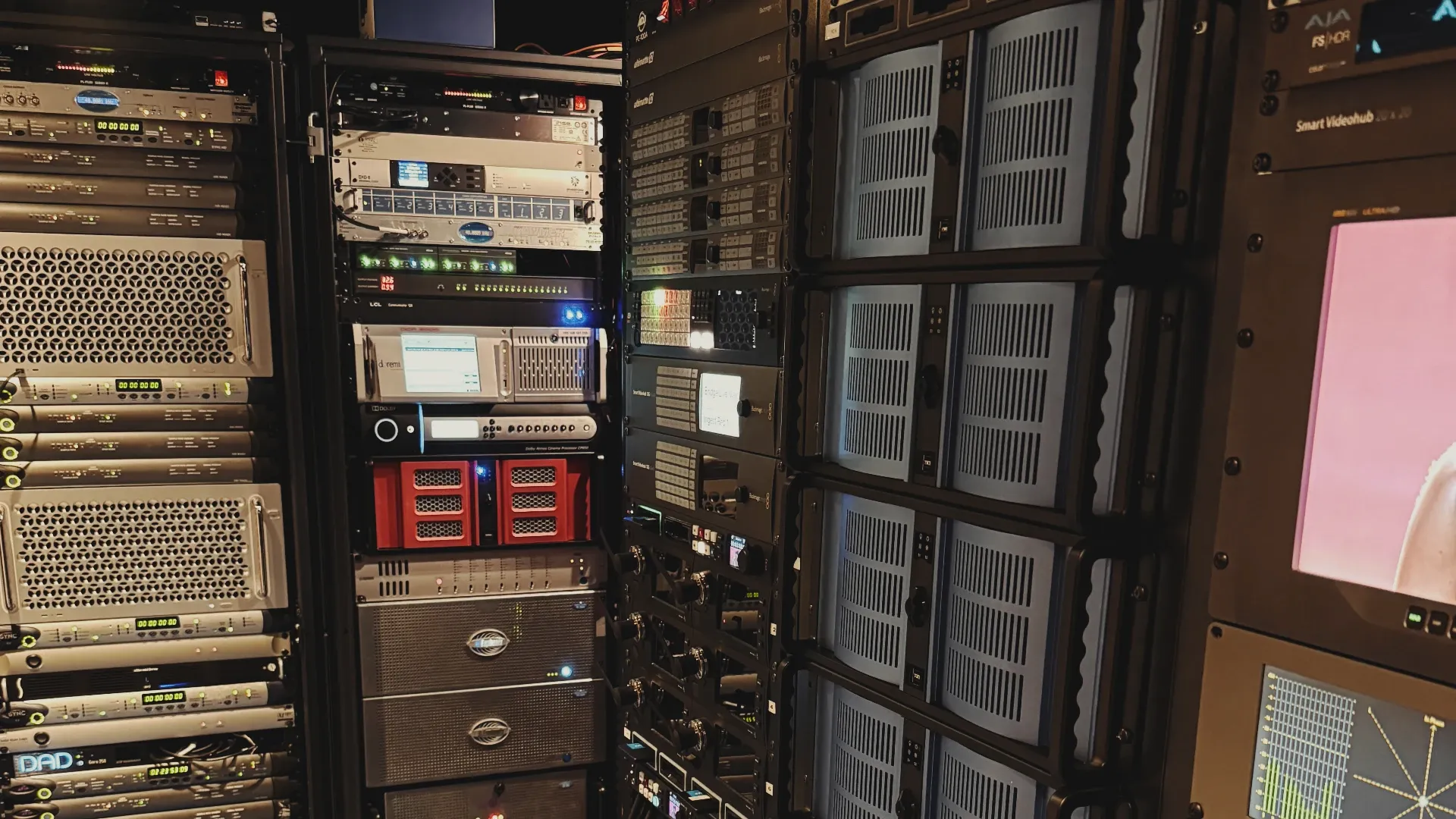
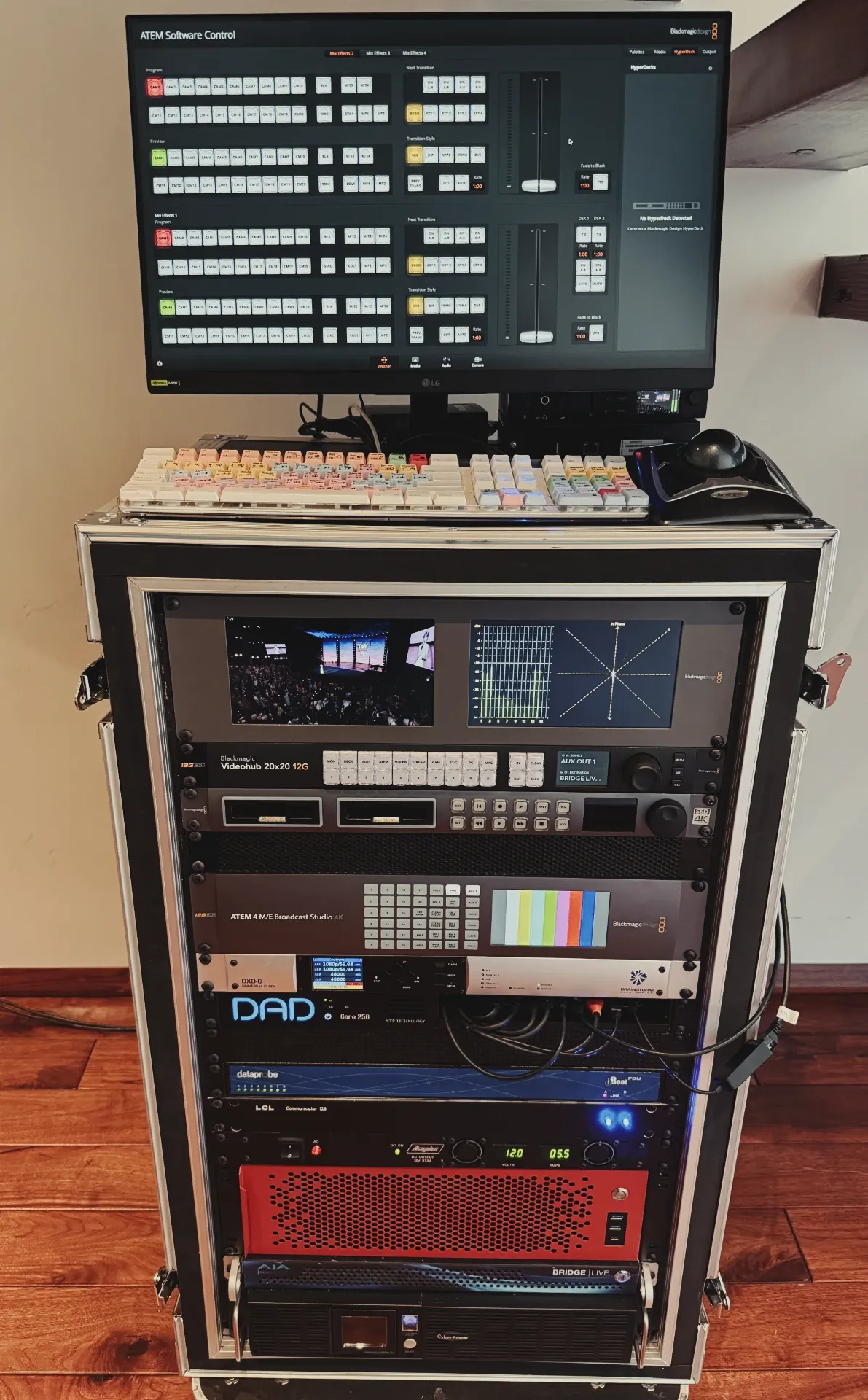
The team built sending and receiving PCs with Blackmagic Design DeckLink hardware. A portable rack travels to the venue; a high-performance workstation at the Laurel Canyon facility receives the feeds over the studio's fiber connection.
Each feed can be configured for its own purpose. A high-bitrate program feed handles monitoring and recording, while lower-bitrate WebRTC feeds give the responsiveness needed for remote switching.
In one setup, a technical director at the studio receives a line cut, multiview, preview, and several other production feeds. The switcher stays at the venue, but the studio team can control it remotely through a Layer 2 VPN using Blackmagic software. That gives them close to the same access and control they'd have on-site.
During testing, Laurel Canyon Live measured roughly three to five frames of glass-to-glass latency over WebRTC. That's fast enough for Abell to make quick cuts without feeling disconnected from the live performance.
Proven at the Dolby Theatre
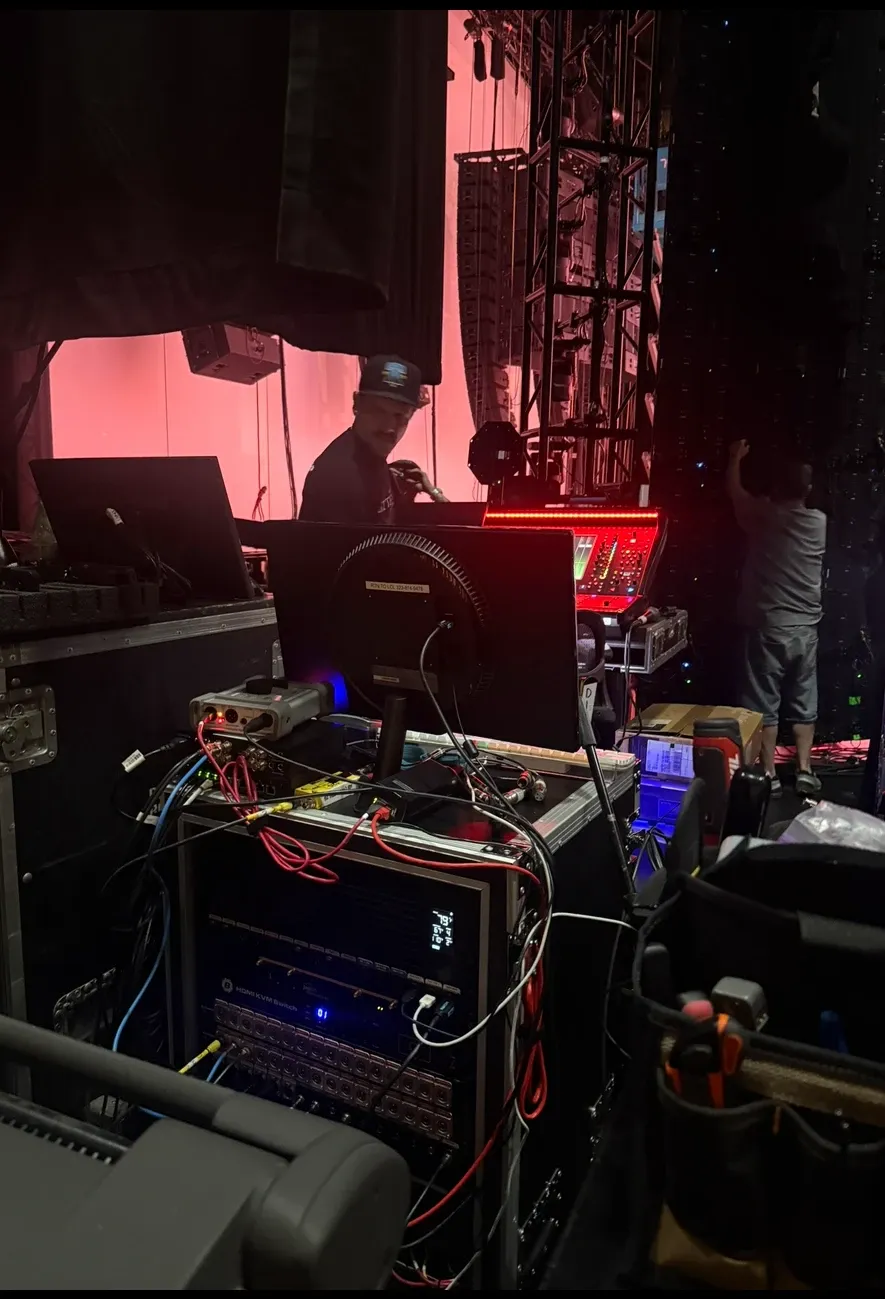
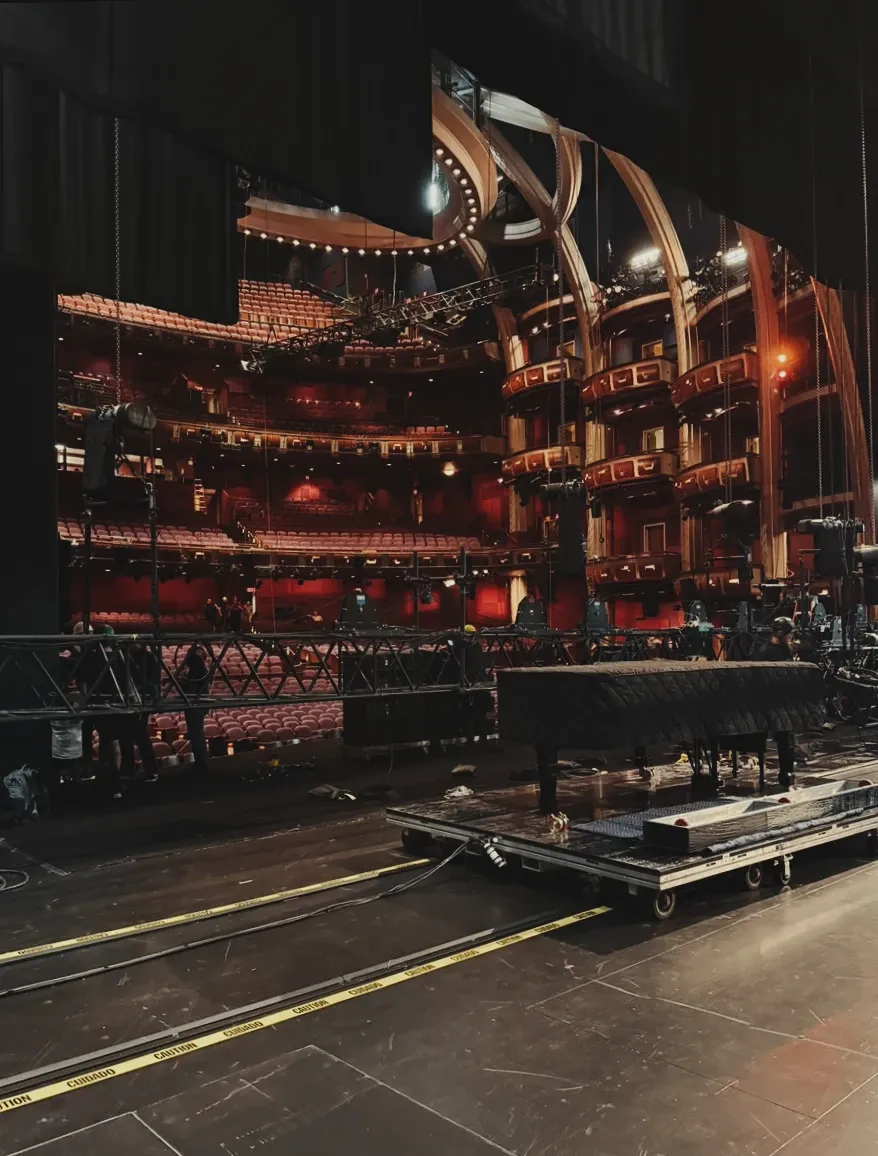
The toughest test came during a high-profile pop production at the Dolby Theatre. Laurel Canyon Live sent a 50 Mbps video feed from the venue back to the studio. It arrived without visible flaws and was recorded to a HyperDeck. The team also put the feed up on the facility's 35-foot projection screen and monitored it on an HDR television. On the big screen, it looked close to ProRes Proxy quality.
Holding up when the venue doesn't cooperate
At the Avalon, the internet connection had enough bandwidth, but the venue's router wasn't built for demanding professional video work. A different transport system the team was also using started dropping frames. Video Transport kept delivering a stable, high-quality picture over the same network.
That matters because Laurel Canyon Live can't control what equipment is already sitting at a venue. A system that still works when the router is bad makes it easier to say yes to more locations.
What it changes for the business
Moving key production functions back to the studio means engineers and technical directors get to use monitoring, recording, mixing, and post-production systems they already know, without sending every specialist on the road.
The PC-based setup also fits the company's plan for smaller, easier-to-ship road racks, each one combining video transport, audio transport, networking, recording, and remote control in a single compact system that travels with the artist. The goal is to send fewer people and less gear to each venue, keep the workflow consistent between shows, and tune each feed for the right balance of picture quality and latency.
Looking ahead
Laurel Canyon Live handles several productions like this each year, but the workflow is being built with touring in mind: compact transport racks that can follow an artist from city to city and support live transmission night after night.
The team is also watching for Linux support and JPEG XS. Higher-bitrate JPEG XS transport could get mezzanine-level quality at venues with enough network capacity, cutting down on the number of dedicated hardware encoders needed.
Abell's assessment is simple: "Video Transport just hasn't failed us yet." For a team moving live concert feeds between unpredictable venues and its Los Angeles studio, that's what matters most.